
[See Solution] P(A_1)=.20, P(A_2)=40 , and P(A_2)=.40 . P(B_1 \mid A_1)=.25 . P(B_1 \mid A_2)=.05, and P(B_1 \mid A_3)=.10 Use Bayes' theorem to determine
Question: \(P\left(A_{1}\right)=.20, P\left(A_{2}\right)=40\) , and \(P\left(A_{2}\right)=.40 . P\left(B_{1} \mid A_{1}\right)=.25 . P\left(B_{1} \mid A_{2}\right)=.05\), and \(P\left(B_{1} \mid A_{3}\right)=.10\) Use Bayes' theorem to determine \(P\left(A_{3} \mid B_{1}\right)\)
Deliverable: Word Document 
 (Solution Library) Dr. Stallter has been teaching basic statistics for
 (All Steps) One-fourth of the residents of the Burning Ridge Estates
 (See Steps) A Tamiami shearing machine is producing 10 percent
![[Solution Library] Suppose 1.5 percent of the](/images/solutions/MC-solution-library-54121.jpg "[Solution Library] Suppose 1.5 percent of the antennas on new") [Solution Library] Suppose 1.5 percent of the antennas on new
[Solution Library] Suppose 1.5 percent of the antennas on new
![[Solution Library] The accounting department at Weston](/images/solutions/MC-solution-library-54122.jpg "[Solution Library] The accounting department at Weston Materials, Inc.,") [Solution Library] The accounting department at Weston Materials, Inc.,
[Solution Library] The accounting department at Weston Materials, Inc.,
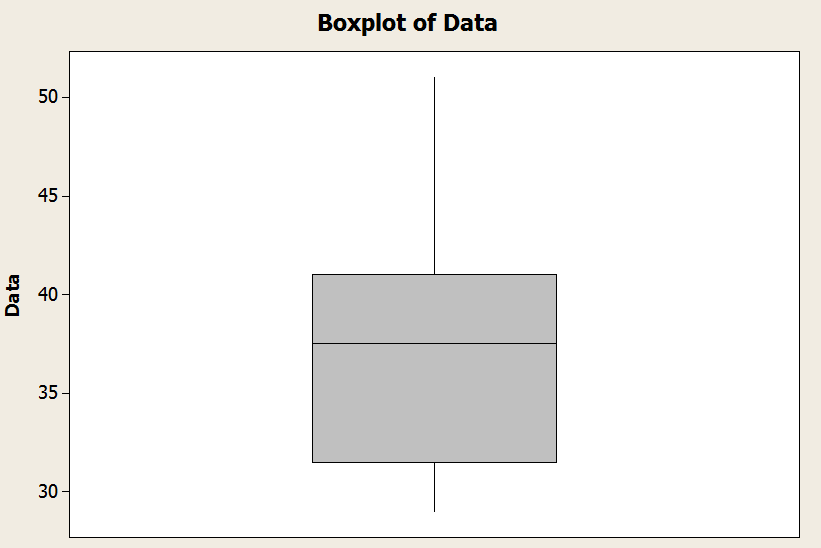 Box and Whisker Plot - MathCracker.com