The data set NIPaH.txt on Bb was collected from sediment samples at 30 sites in the marsh at North Inlet,
- The data set NIPaH.txt on Bb was collected from sediment samples at 30 sites in the marsh at North Inlet, SC in the early 1990’s. The variables of interest are
Y = Total PaH concentration (parts per million)
X = percent silt in the sediment.
By way of explanation, PaH’s are contaminants derived from automotive products like motor oil and rubber; silt is the finest grain size classification in soil texture analysis.
- Construct a scatter plot of the data, suitably labeled for presentation in a thesis; please DO NOT put a fitted line on this one.
- Give the full formal assumptions of the White Noise Simple Linear Regression model that could be used to analyze this data. In the questions that follow, ignore any concerns that you may have with these assumptions.
- Give a 90% confidence interval for the slope of the regression line, with interpretation for the environmental scientist, who is of very high intelligence but may not know as much formal statistics as you do…
- Give a test statistic, P-value and a widely-understandable interpretation for a test of H 0 : 1 =0 vs. H A : 1 0.
- If a 31 st site is to be sampled, with silt observed at 40%, obtain and interpret an interval which should (with 95% confidence) contain the value of Total PaH which will be observed.
- Suppose now at this same 31 st site you are told that 3 independent observations will in fact be taken and averaged; obtain an interval which should (with 95% confidence) contain the average of these 3 independent measurements.
Extra Credit: Tests for trend. Suppose we monitor some aspect of the environment Y (for example, average sea surface temperature) once per year, i.e. at years X 1 = 1, X 2 =2, …., X n = n. The simplest test for trend in the mean value of Y is simply a test of H 0 : 1 =0 versus a two-sided hypothesis, using the SLR model
Y i = 0 + 1 X i + i .
Construct a plot of the power of this test vs. n for n = 10, 20, 30, 40, 50 years if 2 = 25 and if in fact E{Y} is increasing at a rate of 0.1 unit per year. Use =0.05 for the type I error rate.
Deliverable: Word Document

-
 (See Steps) The city of UO, Texas (or is it Taxes) needs to determine
-
[Solution] The city of UO, Texas (or is it Taxes) needs to determine
-
(See) An experimenter sought to find a "natural" fly repellent.
-
(Steps Shown) The data below are also contained in the emailed file
-
[Step-by-Step] Use Minitab as much as you see fit to answer the following
-
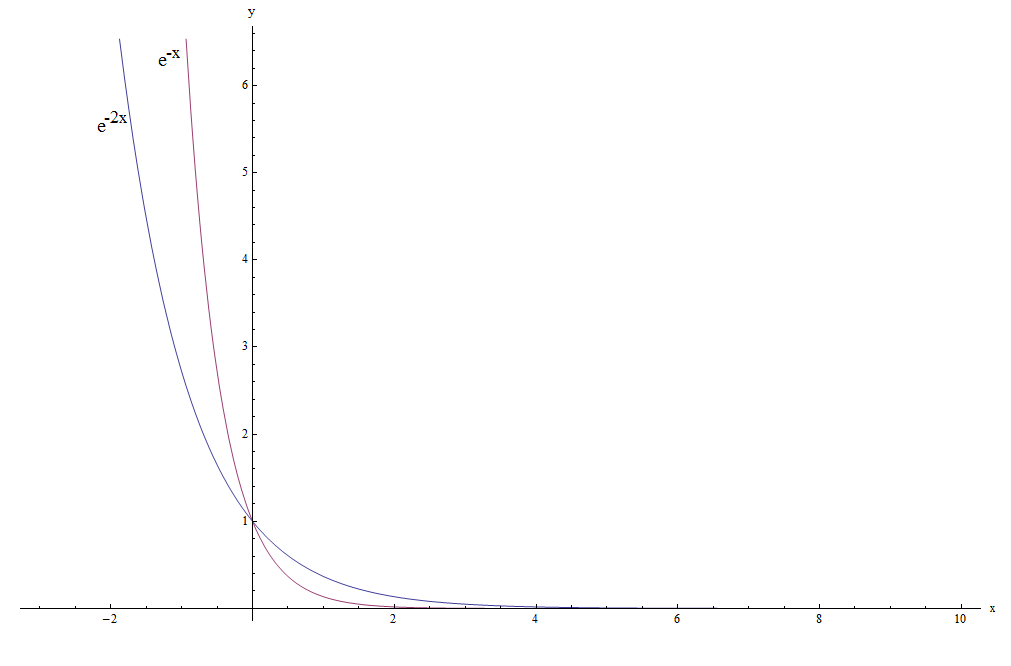
Exponential Function Graph maker - MathCracker.com

![[Solution] The city of UO, Texas (or](/images/solutions/MC-solution-library-80347.jpg "[Solution] The city of UO, Texas (or is it Taxes) needs to determine")

![[Step-by-Step] Use Minitab as much as you](/images/solutions/MC-solution-library-80350.jpg "[Step-by-Step] Use Minitab as much as you see fit to answer the following")