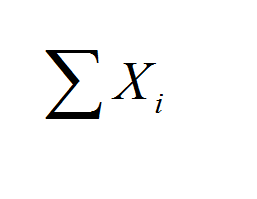
Chapter 17, page 381, problem 1a,b,c,d,e. All calculations for this problem must be done by hand. The
Chapter 17, page 381, problem 1a,b,c,d,e.
- All calculations for this problem must be done by hand. The calculations cannot be completed in SPSS. Use the formulas on pages 367 and 369. The Equation 17.1 on page 367 should read 53.5 % x 472 = 252.4 instead of 53.48 % x 472 = 252.4. Use the Module 12 Notes to help you with these calculations.
- Consider the following table: p.381 (SPSS Statistics 17.0 Guide to Data Analysis Norusis book)
- Calculate the number of cases you would expect in each cell if the two variables are independent.
- For each cell, calculate the difference between the observed and the expected number of cases.
- Calculate the chi-square statistic for the table.
- What are the degrees of freedom for the table?
- What null hypothesis are you testing with the chi-square statistic you computed?

Chapter 17, page 382, problems 2, 3a,b, 4, 6. Use the gss.sav data file to answer these questions. For question 6, select cases so that pres96 < 4 .
- Can you reject the null hypothesis that amount of Internet use ( netcat ) and perception of life (life) are independent? Explain.
-
Test the null hypothesis that men and women are equally likely to believe that there is a life after this one (variable postlife). What can you conclude?
a. Which variable in the table is the dependent variable?
b. If the null hypothesis is true, what’s your best guess for the percentage of people who believe in life after death? The percentage who don’t believe in life after death? - Test whether belief in life after death and highest degree earned (variable degree) are independent. What do you conclude?
6. Test the null hypothesis that men and women were equally likely to vote for Perot, Dole, and Clinton (variable pres96 ). (You’ll have to exclude people whose response was Other. You can do this by making the code 4 [ Other ] a missing value or by selecting cases for which pres96 does not equal 4.) Summarize your findings.
Chapter 17, pages 381-382, problem 3.
3. You are studying the relationship between productivity and length of employment. Both variables are coded into three categories. You compute a chi-square test of independence and find the observed significance level to be 0.35. A personnel consultant does a similar study using the same criteria and categories. He calculates a chi-square test of independence and finds an observed significance level of 0.002. You examine his results and notice that the percentage of cases in each cell of the table is almost identical to the percentages that you observed. You conclude that he doesn’t know how to calculate a chi-square value. Give another explanation for why his chi-square could differ from yours.
Chapter 18, pages 412, problems 1a,b,c, 3a,b,c,d,e,f,g,h.
- For problem 1, your answers must be a non-parametric test. You do not have to explain why you chose the test.
- For problem 3, there is more than one correct answer for most of these. The correct response can be either parametric or non-parametric. You only have to give me one answer and you will get credit if it is one of the correct responses. You do not have to explain why you chose the test.
- Indicate which nonparametric test you would use in each of the following situations:
- You are interested in comparing the satisfaction rankings given by male and female purchasers of a new product. Wilcoxon Rank Sum
- You are interested in comparing the family incomes of purchasers of four different types of products. Kruskal-Wallis
- You are interested in whether product rating differs before and after use. Wilcoxon Signed-Ranks
3. For each of the following situations, indicate which statistical test (s) you would use:
a. You want to know if patients lose weight during radiation therapy, so you conduct a study in which you weigh each patient before and after radiation therapy. Paired-samples t-test
b. You want to know if women marry men who earn more than they do, so you select you 100 working couples and obtain salaries for both spouses. Paired-samples t-test
c. You want to know whether men and women are equally likely to like opera. Chi-Square test of proportions
d. You want to know whether Eskimos, Alaskans, and Canadians have the same average rate. ANOVA
e. You want to know if there is a difference in high school GPA for students who complete college and those who enroll but do not complete it. Two-independent samples t-test
f. You want to know if four treatments for curing acne are equally effective. Each of 50 adolescents receives one of the treatments for four months and is then classified as improved , same or worsened . Chi-Square of proportions
g. You want to know whether men and women in four regions of the country have the same average cholesterol levels. Two-Way ANOVA (there are factors: Gender and Region )
h. You want to know if the average IQ of schizophrenics is 100. One-sample t-test
Chapter 18, page 413, problems 1 & 2. Use the gss.sav data file to answer these questions.
1. Use a nonparametric test to see if the median difference in years of education between husbands and wives is 0 (variables husbeduc and wifeduc ). What do you conclude? Compare your results to those from a paired t test. If the assumptions are met for the paired t test, which test should you use?
2. Compute a nonparametric test to see whether the distribution of hours of television watched per day (variable tvhours ) is the same for people in the five degree categories (variable degree ). What do you conclude? How do your conclusions compare to those from a one-way analysis of variance?
-
Chapter 18, page 413, problems 6 & 8. Use the
gssft.sav
data file to answer these questions.
6. The variables husbft and wifeft tell you whether a husband and wife are employed full time. Use the sign test to test whether husbands and wives are equally likely to be employed full time. What do you conclude?
8. Use a nonparametric test to see if there is a difference in hours worked for males and females (variable hrs1 ). What do you conclude? - Chapter 18, page 414, problems 10 & 12. Use the salary.sav data file to answer these questions.
For problems 10 & 12, you must select cases (jobcat = 1) to limit your sample to clerical workers.
12. Use a nonparametric test to see whether current salaries (variable salnow ) for clerical employees differ for the four gender/race groups (variable sexrace ). Compare your results from those from a parametric analysis. Summarize your conclusions.
- Chapter 18, page 414, problem 16. Use the electric.sav data file to answer this question.
16. Use a nonparametric test to test the whether cigarette consumption (variable cgt58 ) is related to education (variable educcat ). What can you conclude?
s
Deliverable: Word Document

-
![[See Steps] Assignment #1a Instructions: Import the](data:image/svg+xml,%3Csvg%20xmlns='http://www.w3.org/2000/svg'%20viewBox='0%200%20150%20150'%3E%3C/svg%3E "[See Steps] Assignment #1a Instructions: Import the file") [See Steps] Assignment #1a Instructions: Import the file "Assignment
[See Steps] Assignment #1a Instructions: Import the file "Assignment
-
[See Steps] Assignment #1a Instructions: Import the file "Assignment
-
[See Solution] As part of a drug stability monitoring exercise,
-
(Solution Library) Unit 4 - Project 7 Assignment Instructions Answer
-
(See Steps) Unit 4-Project 8 Assignment Instructions Answer each
-
Complete Summation Calculator - MathCracker.com
![[See Steps] Assignment #1a Instructions: Import the](/images/solutions/MC-solution-library-81360.jpg "[See Steps] Assignment #1a Instructions: Import the file")
![[See Steps] Assignment #1a Instructions: Import the](/images/solutions/MC-solution-library-81361.jpg "[See Steps] Assignment #1a Instructions: Import the file")
![[See Solution] As part of a drug](/images/solutions/MC-solution-library-81362.jpg "[See Solution] As part of a drug stability monitoring exercise,")