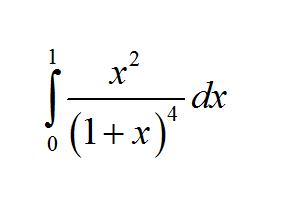
Aggression scores on a scale of 1-10 (with 10 being most aggressive) were estimated for a group of seven
-
Aggression scores on a scale of 1-10 (with 10 being most aggressive) were estimated for a group of seven females without kittens, and again for the same seven females with kittens. The data are as follows: [8 pts]
Female Without Young With Young 1 4 10 2 2 5 3 5 4 4 6 10 5 5 3 6 1 10 7 7 9 - What statistical test would you conduct to address the claim that female cats are more aggressive with young than without young?
- Use SPSS to conduct the appropriate statistical test,
- What is the calculated test statistic?
- What is the p-value associated with the observed test statistic?
iii. Based on these results, are female eats more aggressive with young than without young?
4. The following data are standard lengths of three species of minnows collected from the Pedernales River during the summer of 2003. [8 pts.]
| Standard length of minnows | ||
| roundnose minnow | sand shiner | bullhead minnow |
| 45.42 | 35.09 | 35.05 |
| 50.03 | 35.26 | 37.7 |
| 45.73 | 28.33 | 37.31 |
| 53.22 | 37.43 | 49.92 |
| 48.28 | 33.37 | 39.55 |
| 57.73 | 31.7 | 38.16 |
| 54.21 | 26.82 | 32.2 |
| 46.17 | 30.86 | 36.8 |
| 43.78 | 24.89 | 37.6 |
- What statistical test would you conduct to address the claim that average length of minnows differs among species?
- Use SPSS to conduct the appropriate statistical test.
- What is the calculated test statistic?
- What is the p-value associated with the observed test statistic?
- Based on these results, is there a difference in average length among minnow species?
5. As part of her thesis project, Cinderella examined plant diversity along the Bosque and Paluxy Rivers. She selected three sites along each river to capture any longitudinal variation that might exist in measures of diversity (species richness S and species diversity - D). Her data are provided below. [8 pts].
| Bosque River | Paluxy River | ||||||||||
| Site 1 | Site 2 | Site 3 | Site 1 | Site 2 | Site 3 | ||||||
| S | D | S | D | S | D | S | D | S | D | S | D |
| 18 | 15.97 | 25 | 12.94 | 32 | 13.21 | 21 | 16.62 | 24 | 13.04 | 28 | 17.68 |
| 23 | 14.99 | 23 | 15.49 | 30 | 15.27 | 23 | 16.27 | 25 | 13.62 | 32 | 15.78 |
| 24 | 14.45 | 30 | 12.49 | 27 | 14.72 | 14 | 13.65 | 27 | 17.68 | 34 | 15.79 |
| 24 | 17.55 | 16 | 14.31 | 27 | 12.67 | 18 | 17.62 | 22 | 13.18 | 41 | 11.59 |
| 26 | 18.73 | 27 | 13.12 | 32 | 17.37 | 19 | 15.65 | 24 | 14.17 | 23 | 15.46 |
| 23 | 13.95 | 29 | 12.65 | 25 | 14.97 | 14 | 13.7 | 23 | 13.99 | 25 | 16.37 |
| 26 | 15.21 | 29 | 12.96 | 34 | 16.07 | 13 | 10.1 | 25 | 18.24 | 35 | 13.73 |
| 14 | 13.38 | 28 | 14.2 | 33 | 13.57 | 25 | 15.95 | 33 | 15.16 | 28 | 12.99 |
| 20 | 16.36 | 25 | 15.35 | 26 | 13.69 | 20 | 15.23 | 22 | 12.84 | 23 | 14.63 |
| 19 | 16.98 | 28 | 14.77 | 29 | 15.63 | 17 | 13.82 | 18 | 12.75 | 32 | 12.89 |
a. What statistical test should she conduct to determine whether plant diversity differed between the Bosque and Paluxy Rivers?
b. Use SPSS to conduct the appropriate statistical test.
- What are the calculated test statistics?
- What are the p-values associated with the observed test statistics?
iii. Based on these results, what would you conclude?
6. Archaeopteryx is an extinct beast having feathers like a bird but teeth and a long bony tail like a reptile. Only a few fossil specimens are known. Because these specimens differ greatly in size, some scientists think they belong to different species. If the specimens belong to the same species and differ in size because some are younger than others, there should be a positive linear relationship between the lengths of a pair of bones from all individuals. An outlier from this relationship would suggest a different species. Here are data on the lengths in centimeters of the femur and the humerus from five specimens:
| Femur | 38 | 56 | 59 | 64 | 74 |
| Humerus | 41 | 63 | 70 | 72 | 84 |
- Construct a scatter plot of femur and humerus length and attach the graph to the back of this exam. Do you think that all five specimens could have come from the same species?
- Find the correlation coefficient. How does it support your interpretation?
- Does it matter whether you use femur or humerus length for the x axis? Explain why.
Deliverable: Word Document

-
![[Solution Library] Exercise 1: Use Factorial ANOVA](data:image/svg+xml,%3Csvg%20xmlns='http://www.w3.org/2000/svg'%20viewBox='0%200%20150%20150'%3E%3C/svg%3E "[Solution Library] Exercise 1: Use Factorial ANOVA to determine if there") [Solution Library] Exercise 1: Use Factorial ANOVA to determine if there
[Solution Library] Exercise 1: Use Factorial ANOVA to determine if there
-
[Solution Library] Which of the following mathematical relationships
-
[Solution] Homework Week 5 (7 points) Consider the following linear
-
[See Solution] You must use Ph Stat for all calculations. Construct a
-
(See Steps) You have just been hired to work for JMed, a corporation
-
Partial Fraction Decomposition - MathCracker.com
![[Solution Library] Exercise 1: Use Factorial ANOVA](/images/solutions/MC-solution-library-81226.jpg "[Solution Library] Exercise 1: Use Factorial ANOVA to determine if there")
![[Solution Library] Which of the following mathematical](/images/solutions/MC-solution-library-81227.jpg "[Solution Library] Which of the following mathematical relationships")
![[Solution] Homework Week 5 (7 points) Consider](/images/solutions/MC-solution-library-81228.jpg "[Solution] Homework Week 5 (7 points) Consider the following linear")
![[See Solution] You must use Ph Stat](/images/solutions/MC-solution-library-81229.jpg "[See Solution] You must use Ph Stat for all calculations. Construct a")