
Introduction
What’s the one skill you’d want to master to excel in almost any subject? Problem-solving! From science experiments to historical analysis, the ability to tackle challenges head-on is a universal asset. Surprisingly, math plays a massive role in developing this ability. Why? Because math teaches logic, structure, and discipline—qualities that spill over into other areas of life.
But did you know math also helps with financial literacy? Whether you're budgeting for groceries or analyzing investment opportunities, math gives you the tools to make informed decisions. Let’s dive into how math can sharpen your problem-solving skills across a variety of subjects and aspects of life.
The Foundation of Logical Thinking in Math
Think about solving a simple math equation like 2x+5=152x + 5 = 152x+5=15. To find the answer, you must follow a sequence: isolate the variable, solve step by step, and check your work. This logical progression is the backbone of problem-solving.
Similarly, logic-driven thinking is vital in computer science. Writing a program to solve a task requires structuring the code correctly—just like solving a math problem. Math trains your brain to break down complex challenges into manageable parts, whether you’re debugging code, analyzing data, or managing tasks in everyday life.
Mastering Problem-Solving in Finance Through Math
Managing finances can be tricky, but math simplifies it. Whether you're calculating interest rates, setting up a budget, or analyzing stock trends, mathematical principles are essential. For example, understanding compound interest can mean the difference between growing your savings or losing money in a poor investment.
Math also sharpens decision-making. Imagine you’re comparing two loans: one with a lower interest rate but higher upfront fees, and another with higher monthly payments but fewer extra costs. Applying formulas to these scenarios helps you make the smartest choice.
Mastering financial concepts not only boosts your problem-solving skills but also ensures better money management in daily life. If you're looking to deepen your understanding of financial math, explore service https://assignmentbro.com/finance-homework-help to build confidence and accuracy in this area. By strengthening your grasp on financial math, you'll be equipped to tackle real-world challenges with greater ease.
Whether you're dealing with personal finances or analyzing global economic trends, math provides the foundation for sound judgment and informed decisions.
Applying Analytical Skills to Science
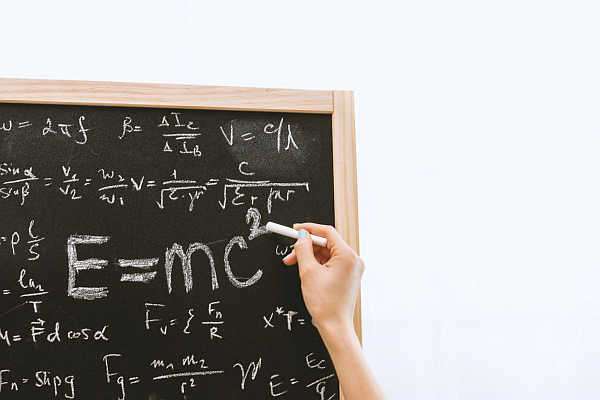
Math is the language of science. It’s how scientists measure, predict, and validate theories. For instance, Newton’s laws of motion or Einstein’s famous equation E=mc2 rely entirely on mathematical principles.
Biology, chemistry, and physics also benefit from math. Whether you're calculating the pH of a solution, determining velocity, or analyzing DNA sequences, math provides a structured approach to solving problems. Learning to apply math in these contexts trains your analytical brain and hones your ability to approach challenges methodically.
For example, when testing hypotheses in biology, mathematical tools like statistical analysis allow researchers to determine if results are significant. Without math, these discoveries wouldn't be possible!
Enhancing Creativity and Analysis in Literature and Art
You might not associate math with creativity, but the two are closely linked. Art relies on mathematical principles like symmetry, proportions, and the golden ratio to create visually pleasing works. For example, da Vinci’s famous Vitruvian Man showcases perfect mathematical balance in art.
In literature, math-inspired thinking helps with structure and analysis. Breaking down a novel’s plot into its essential components or analyzing the rhythm of a poem involves pattern recognition—a skill sharpened by math. Similarly, crafting a persuasive argument in an essay mirrors the step-by-step reasoning we practice in solving equations.
Even creative subjects benefit from math’s discipline, showing how interconnected these fields truly are.
Decoding Historical Patterns with Math
History may seem like a storybook, but numbers often reveal the truth behind the tales. Math helps historians analyze patterns, like tracking population changes during the industrial revolution or comparing economic trends over centuries.
Timelines, graphs, and statistics are crucial tools in understanding historical events. For example, studying election data through charts helps us interpret the public’s shifting opinions. Similarly, examining trade routes or resource allocation during significant wars offers insights into strategy and outcomes.
By combining math with history, you gain the ability to question and verify claims, moving beyond mere memorization to true understanding.
Practical Tips for Strengthening Problem-Solving Through Math
Want to boost your problem-solving skills? Here are some actionable tips:
- Practice puzzles and games. Sudoku, logic puzzles, and math-based games improve critical thinking.
- Apply math to real-world problems. Try budgeting your monthly expenses or calculating savings for a big purchase.
- Integrate subjects. Use math to analyze data in science, structure essays in literature, or create balanced designs in art.
- Seek help when needed. If you’re struggling with specific areas like financial math, don’t hesitate to explore resources or seek expert guidance to build your confidence.
The more you practice interdisciplinary thinking, the stronger your problem-solving skills become.
Conclusion
Math is more than numbers and formulas—it’s a universal problem-solving tool. Whether you’re analyzing a Shakespearean sonnet, managing your finances, or decoding historical data, math’s logical structure sets you up for success.
By embracing math’s principles, you can unlock new levels of critical thinking and creativity in all areas of life. So next time you solve an equation, remember: you’re not just learning math—you’re building the skills to conquer challenges in every subject.
Related Calculators
 Math Problems - MathCracker.com
In case you have any suggestion, or if you would like to report a broken solver/calculator, please do not hesitate to contact us .